Geekie One

Geekie One is an education platform used by more than 2 million students and 620 schools across Brazil. I worked on it for 6 years: from the conception of critical features to leading design at a group level.

2M+ Students impacted
620+ Schools nationwide
NPS 55 Best didactic material of 2021
6 Years From Senior to Design Manager

The Challenge

Geekie One was born in 2017 with a bold ambition: to be the backbone of the school, covering the entire K-12 journey — from early childhood education through high school.

In 2019, when I joined, the challenge was to make that vision real and scalable.

In practice, this meant serving very distinct personas without dumbing things down or over-complicating them. Reducing the operational burden on teachers and coordinators. Creating an accessible, fluid, and reliable digital experience used daily by thousands of people. Integrating physical materials with a digital platform that generated learning data and evidence.

During the pandemic, the challenge intensified. Geekie One needed to adapt rapidly to ensure pedagogical continuity, assessments, and remote monitoring — at national scale.

In the post-pandemic period, the landscape reversed. Digital fatigue grew: families and schools became more defensive about screen time, and legislation tightened. We needed to make the product truly hybrid and demonstrate that students' screen time was focused on studying. We discovered that, for this pedagogical purpose, students were not overusing screens — and communicating that became part of the work.

In 2019

Scaling the product

When I took on the challenge, the focus was scaling the product vision through a fluid digital experience for different profiles, without language extremes. Reducing teacher workload and turning daily usage into real learning data and evidence.

During the pandemic

Rapid adaptation

The challenge intensified. Geekie One needed to adapt rapidly to ensure pedagogical continuity, assessments, and remote monitoring, at a time when all schools were operating from home and at national scale.

Post-pandemic

Digital fatigue

Families and schools became defensive about screens, and legislation tightened. We needed to make the product truly hybrid and prove usage was study-focused. We discovered that, for pedagogical purposes, there was no screen overuse — and communicating this became part of the work.

My Role

I joined as a Senior Product Designer, evolved to Staff Product Designer, and acted as Design Manager from 2024.

My role was hybrid and evolved over the 6 years:

2019–2023

Staff Product Designer

I acted as design technical lead, aligning product, engineering, data, and pedagogy. I led AI initiatives and advanced data use, such as assisted grading and predictive dashboards, ensuring efficiency and personalization with humans at the center. I also co-created tools directly with hundreds of educators and guided the evolution of our accessible Design System (WCAG).

2024–2025

Design Manager

I led design operations at group level, aligning processes and connecting product, engineering, and customer success leadership for strategic decisions. I directly managed five designers with focus on psychological safety and sustainable high performance (achieving 4.5/5 in internal engagement). My role was to ensure the voice of design, balancing user impact, feasibility, and business goals.

What We Built

Product and journeys

A hybrid platform covering the entire K-12 curriculum. Complete journeys for content consumption, activities, assessments, college entrance prep, and pedagogical monitoring. Experiences adapted by segment: playful and multimodal early childhood, clear progression for middle school, autonomy and performance focus for high school.

Applied AI

I led the design of three generative AI fronts that became competitive differentiators for the product. All three AI fronts achieved consistent adoption metrics:

Anti-Cheating

Pedagogical visibility in online activities

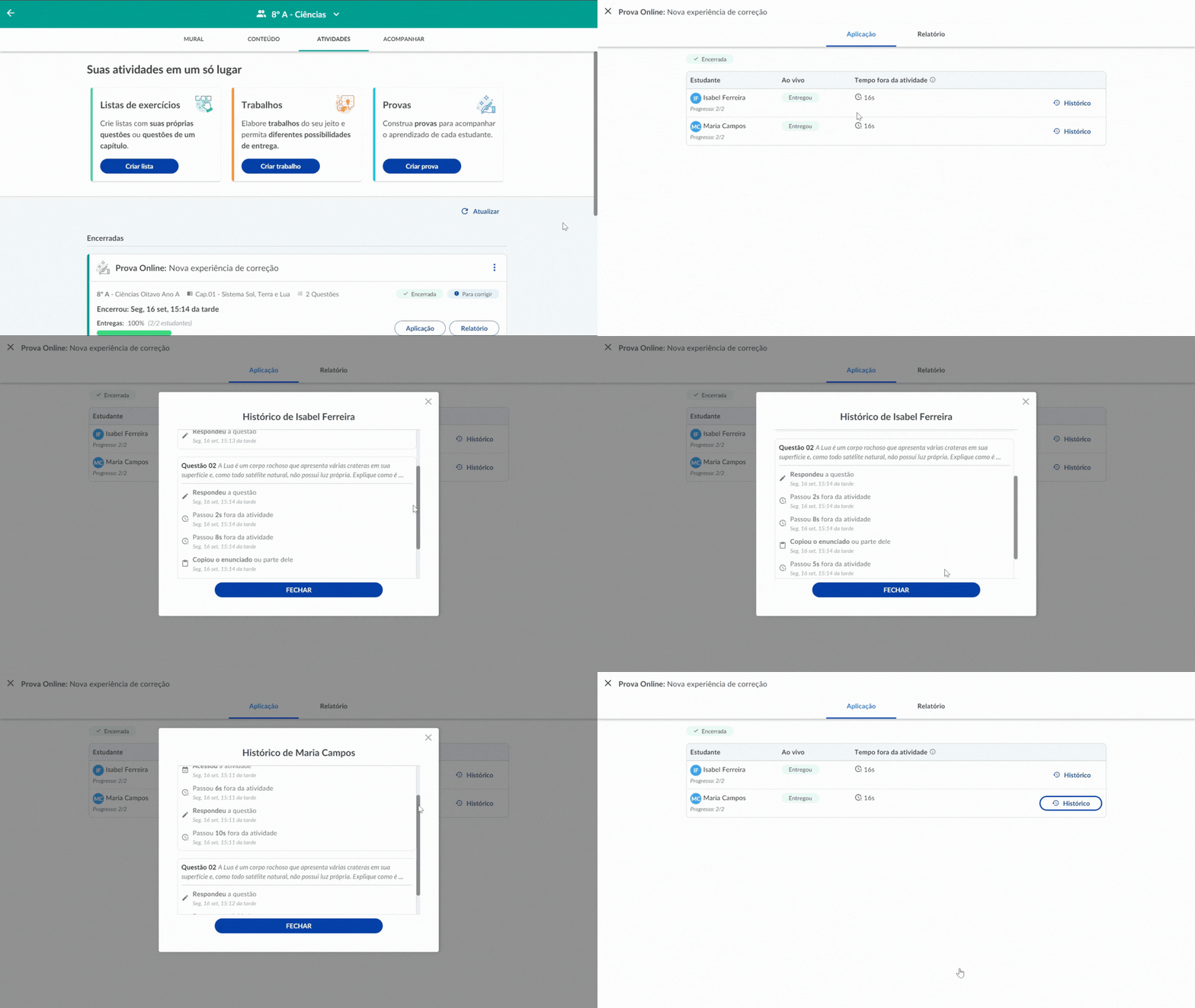
The original request was "block the student's screen during tests." Through discovery, we reframed the problem: the teacher didn't want control. They wanted trust. To know what the student did during the activity. We designed a student activity history visible to the teacher within the platform.

Result: feature retention above 80%, 95% satisfaction, 70% reduction in cheating-related support tickets — and the remaining tickets became improvement requests, no longer distrust about the data.

80%+ Retention
95% Satisfaction
-70% Support tickets
Anti-Cheating interface — student activity history during the assessment

Smart Support

AI-powered essay grading (2024–2025)

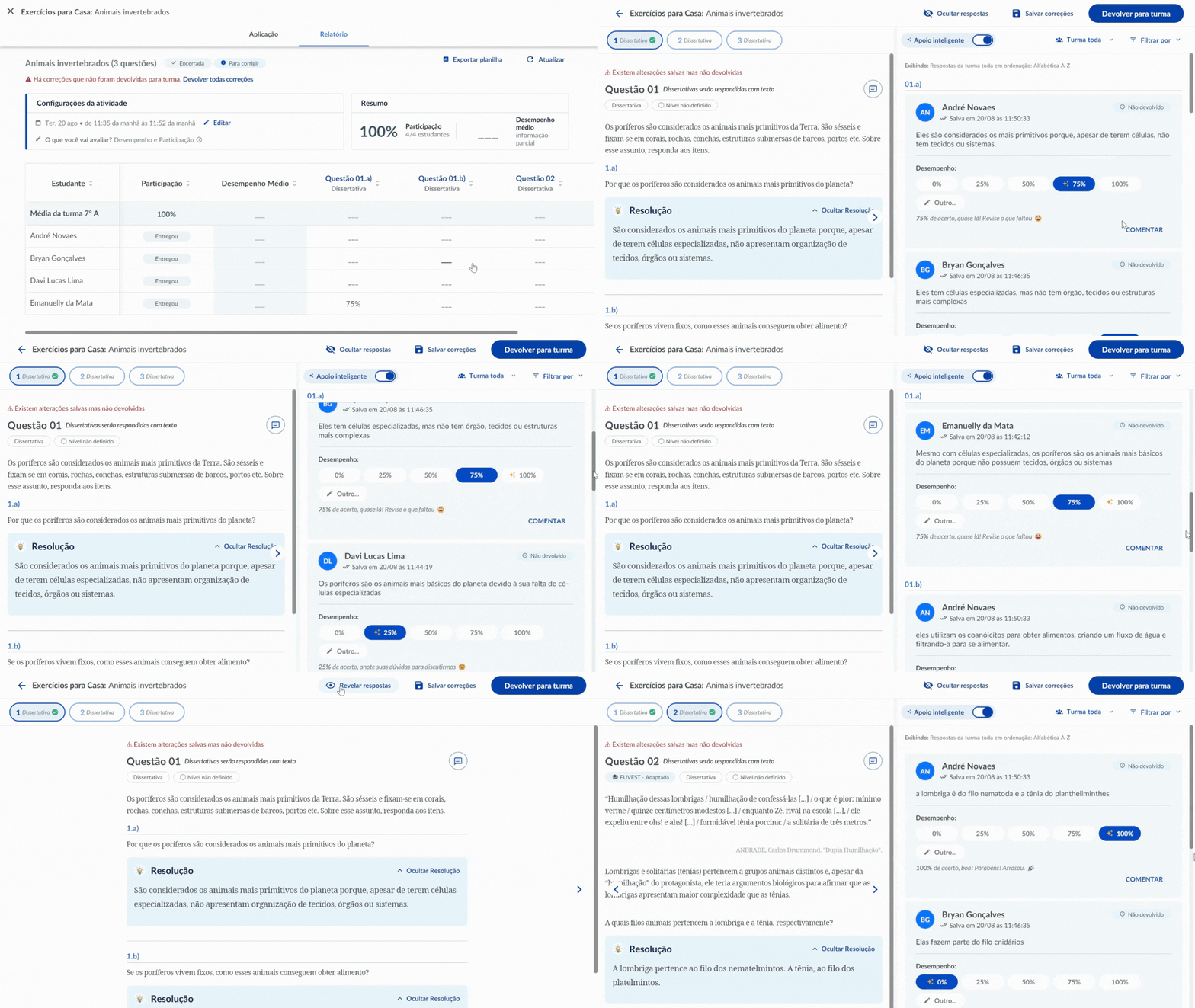
Teachers were spending excessive time grading essay questions, limiting platform usage frequency. I led discovery focused on delivering an MVP that generated immediate value: automated grading with real-time teacher oversight. The feature achieved 80% average retention and raised the activity NPS score by 0.6 points, reaching 4.7/5. The success of this launch facilitated the approval and adoption of subsequent GenAI features. It created an internal trust pathway.

80% Average retention
4.7/5 Activity NPS
Smart Support interface — AI-powered essay question grading

AI-Adapted Questions

Accessibility for autism, dyslexia, ADHD with AI (2025)

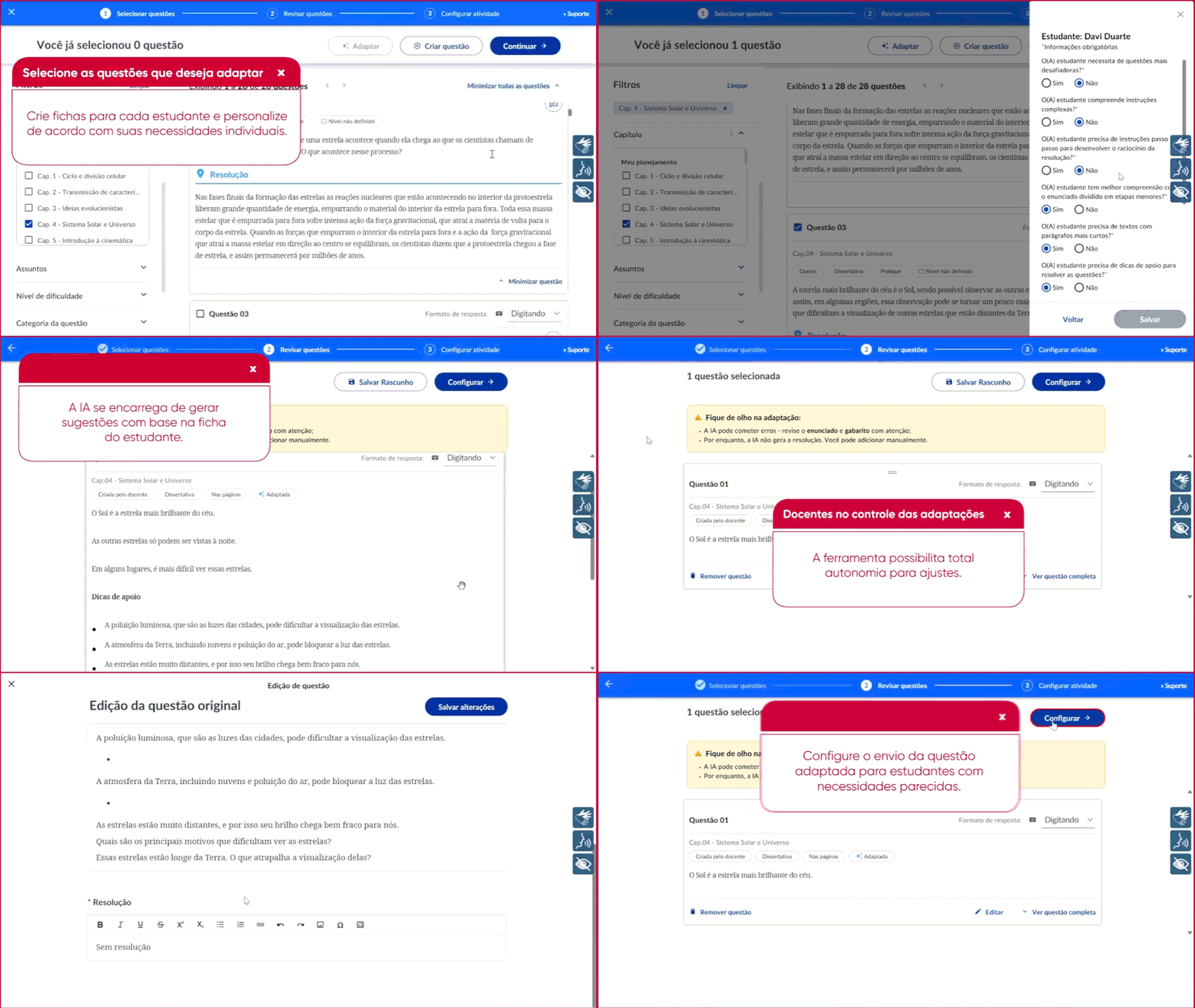
We enabled teachers to adapt questions and content for students with specific needs (autism, dyslexia, ADHD) using AI, expanding the product's accessibility reach and integrating the feature directly into the existing test creation workflow.

We made strategic cuts to the solution to meet the deadline without sacrificing delivered value.

Users who adopted the feature increased the volume of tests submitted through the platform, validating our central hypothesis. 70% CSAT, with significantly less friction in the journey compared to similar launches from other brands in the group.

70% CSAT Teacher satisfaction
AI question adaptation interface for students with autism, dyslexia, and ADHD

Design System

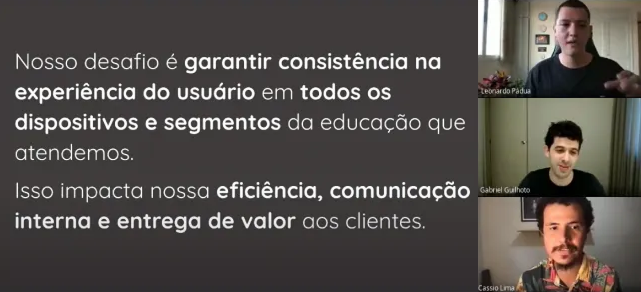
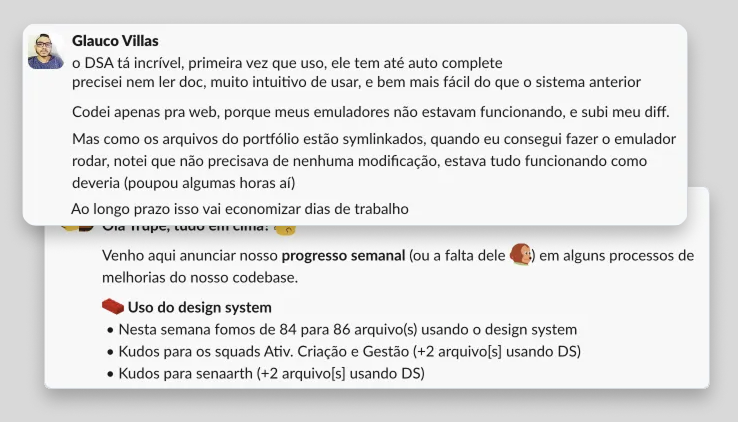
Foundation of Geekie's accessible Design System: multi-product, multi-device, adhering to WCAG best practices. Designed for children, adults, low vision, and different usage contexts. Catalyst for the technology migration from React Native to Capacitor, making the product truly responsive. I detailed the technical and business challenges here.

Results

Product and scale in Brazil

2M+ Students impacted
620+ Schools nationwide
NPS 55 Best didactic material of 2021

During the pandemic, Geekie One was the most highly rated didactic material in the country in a survey of 130,000 families, 14,000 teachers, and 400+ schools, ahead of all competitors.

Leadership and Management

4.5 / 5 Average score in internal climate surveys — covering well-being and development — during a period of team restructuring and organizational transitions.

What I Learned

Six years on the same product teaches things that short projects don't:

Changing the problem direction > Executing fast

The anti-cheating request could have become a screen blocker — and would have generated friction with students, pedagogical frustration, and more support tickets. The decision to investigate the teacher's real pain point transformed a control feature into a trust feature. This shows that the designer's most important decision is often to refuse the obvious solution.

AI needs a trust pathway

The success of Smart Support opened doors for subsequent GenAI features. If the first launch had failed in adoption, internal skepticism would have stalled the roadmap. I learned that in innovation, the sequence matters as much as the solution.

Management is a different craft

The transition from Staff to Manager wasn't a linear promotion, but a change of trade. I had always been close to the team, treating everyone horizontally, acting as technical leadership and mentoring when needed. But managing is different: directing, delegating, giving constant feedback, guiding careers. The challenge was being seen as a leader by people who saw me as a peer. I faced this with frank conversations in 1:1s, delegating according to each person's maturity, seeking mentor advice, and joining an MBA in self-management and leadership. I learned by being honest that I didn't have this skill and needed to develop it intentionally. That's when I started focusing on my own self-management, quality of life, assertive and empathetic communication — and above all, on my values: inner and outer harmony, movement, appreciation of beauty, and excellence.

Hard lesson: Not every initiative deserves to be deepened.

This was my most costly failure

In 2024, I led the "participation-only exercises" initiative. The premise was simple: make it easier to create activities that measured only engagement, without requiring a grade.

We launched in beta, but the problem appeared quickly: without performance data, pedagogical reports became incomplete, threatening the platform's core value proposition for teachers.

After a round of discovery, we iterated toward a solution where teachers could reject incomplete submissions, but the approach felt punitive in an educational context.

In the technical assessment, the final blow: the change affected foundational product concepts, requiring 3 months of heavy refactoring.

After months of discovery and team burnout, the final decision was to discontinue the feature.

I consider this my greatest failure (and learning) as a Staff Designer. I understood that I could have identified earlier the disproportionality between structural technical effort and value return. I learned that not everything needs to be deepened, and it's the designer's job to recommend cutting the initiative before organizational costs accumulate.